For farmers on the ground
Find my next step →Make the land produce before adding more costs.
Identify the fastest responsible income systems, reduce feed and fertility costs, and connect enterprises around the resources already available.
Kwaedza Farm helps African smallholders and diaspora families build practical, climate-resilient farms—starting with water, early income and systems that strengthen one another.
Smallholder farms · Diaspora projects · Training groups · NGOs
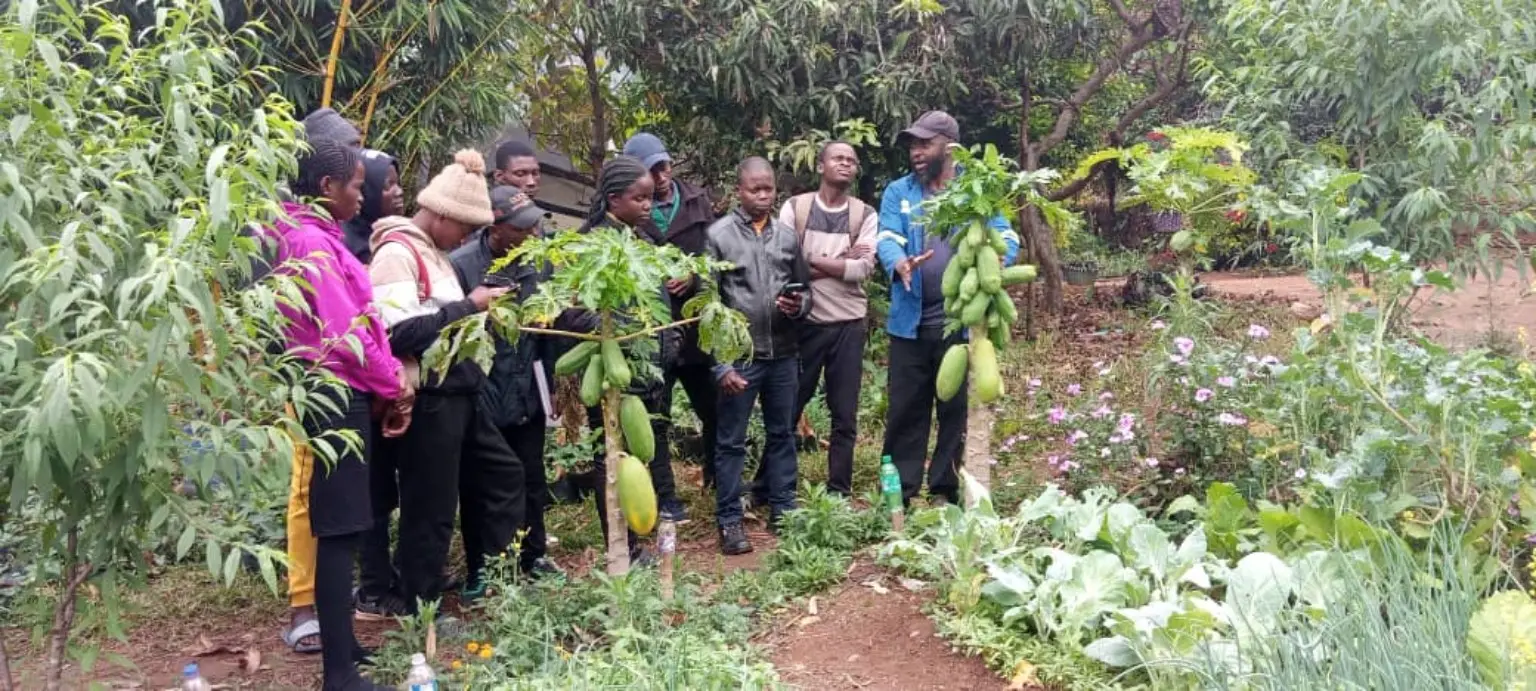
The farmer on the ground and the family funding from abroad need different answers. Kwaedza begins with the decision that is blocking progress—not with a shopping list.
Identify the fastest responsible income systems, reduce feed and fertility costs, and connect enterprises around the resources already available.
Get the development sequence, priorities and verification system clear before money disappears into buildings, equipment and enterprises that cannot yet support themselves.
A borehole without storage, livestock without feed and production without a market are not assets. They are expenses wearing gumboots.
Match supply, storage and distribution to the enterprises the land can actually sustain.
Begin with small, testable enterprises that can create frequent cash flow and reveal the market.
Turn crop residues, manure, water, feed plants and labour into inputs for the next enterprise.
Expand only what the records, market and management capacity have proved can work.
You may not need another enterprise. You may need clarity on water, sequence, management, market or what should deliberately wait.
A focused review of your land, water, budget, management and proposed enterprises—with a practical 90-day priority sheet.
A phased layout connecting water, crops, livestock, fertility, access, labour and markets around your actual site.
Hands-on learning for farmers, schools, churches, NGOs and community groups using live demonstration systems.
Kwaedza visits move beyond a farm tour. Participants explore working systems, ask practical questions and connect each lesson to something they can test at home, at school or in their community.
See how water, crops, livestock, feed and soil fertility connect on a working farm.
Handle materials, inspect the systems and ask questions rooted in real farm conditions.
Choose one practical idea to test at home, at school or in the community.
Suitable for youth groups, schools, churches, farmers, NGOs and community organisations.
Plan a group visit ↗Kwaedza is a developing demonstration farm—not a polished fantasy. Our lessons include what worked, what failed, what cost too much and what should have been built first.
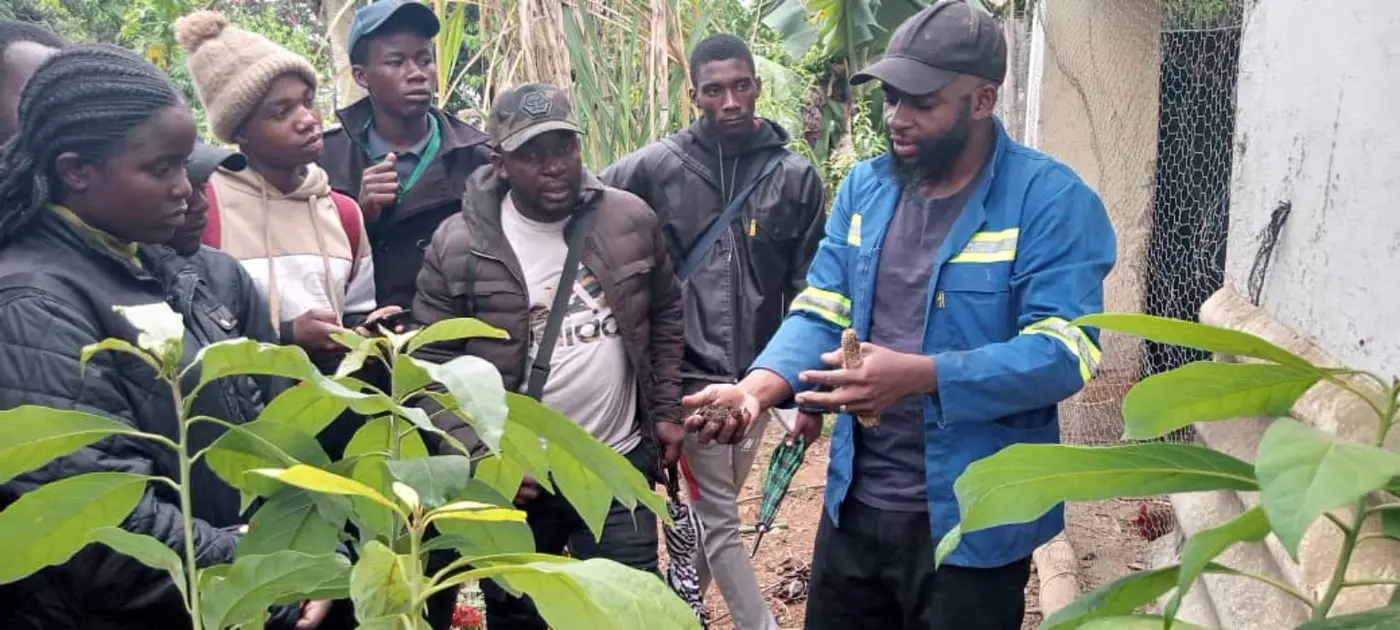
TJ is an integrated farming systems farmer and instructor building Kwaedza as a rural demonstration and learning farm in Masvingo Province. His approach is straightforward: test on the farm, record honestly, then teach what survives contact with reality.
Client and trainee feedback will appear here after each person approves the wording and attribution.
Until then, Kwaedza will not manufacture a testimonial.
These are real systems at Kwaedza Farm—not stock photographs. Together they show how water, crops, livestock, feed and soil fertility can strengthen one another.
Our guides are designed to move the reader from information into a real decision, measurement or installation on the farm.
Kwaedza Farm will verify the EcoCash payment and send your manual or Roadmap to the WhatsApp number you provided.
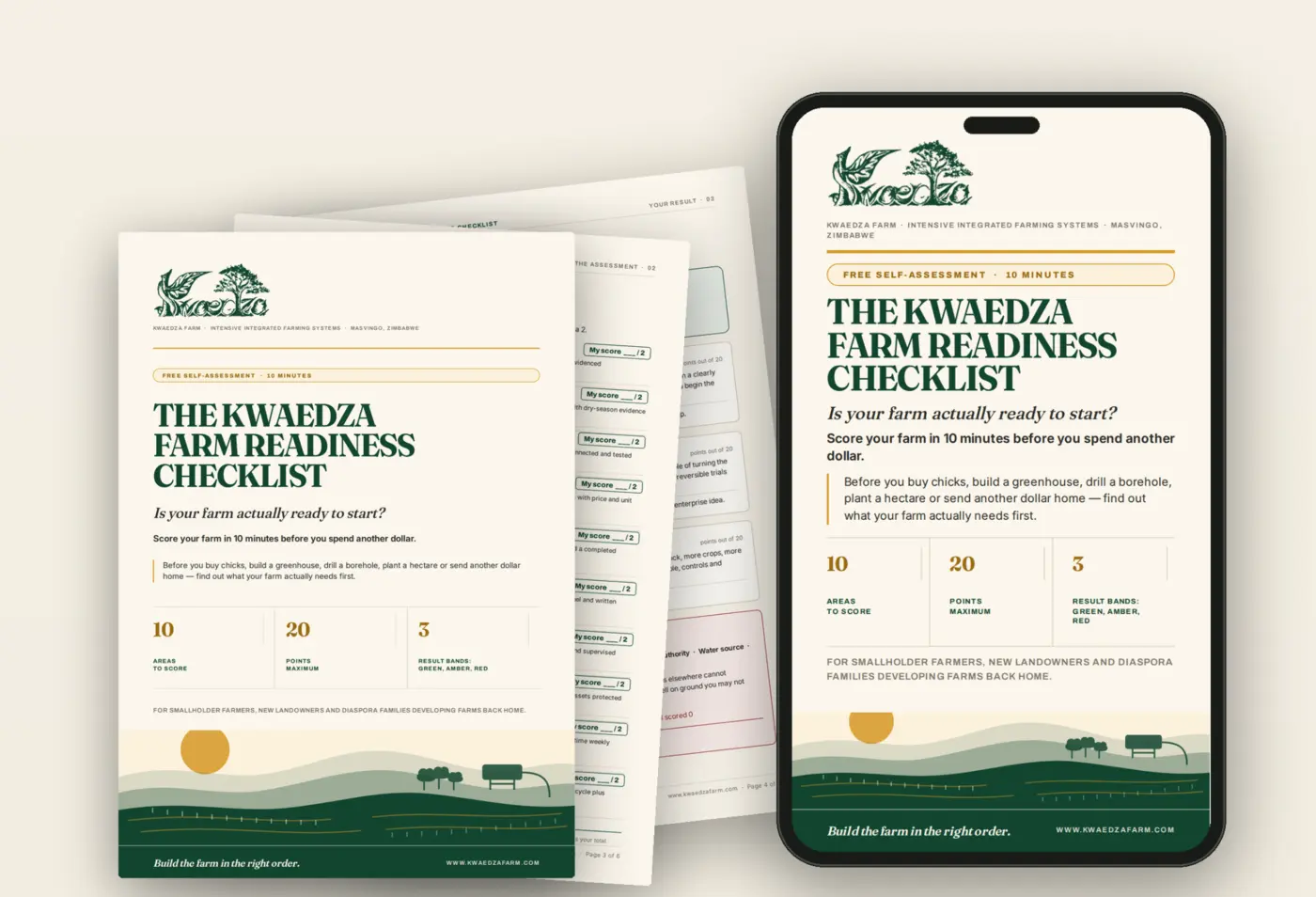
A readiness checklist for anyone preparing to invest in land, infrastructure or a new enterprise.
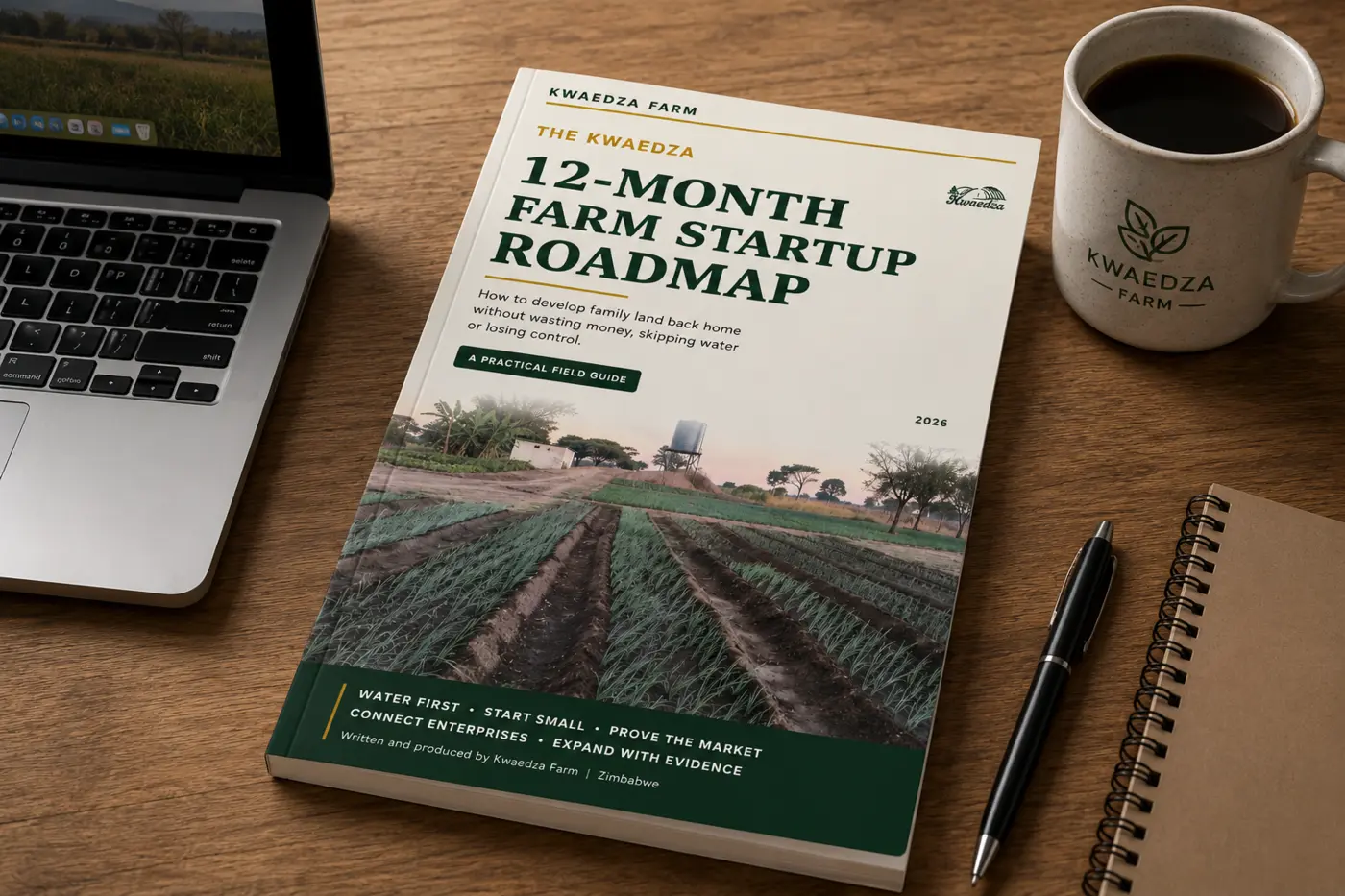
A practical sequence for developing a small farm without trying to fund and build everything at once.
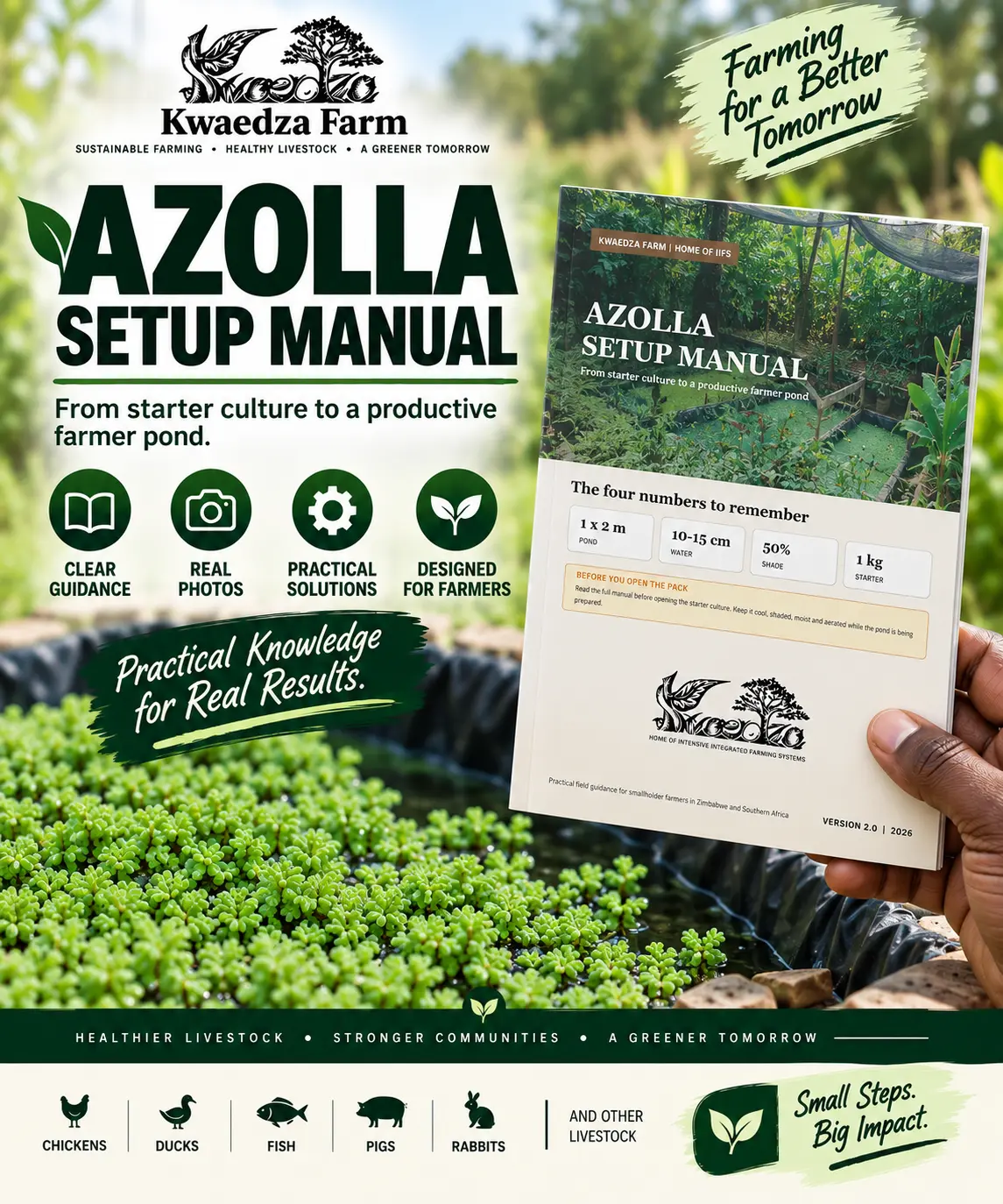
Set up, establish and manage a small azolla system for practical farm use.
“We work for a living—and teach from the work.”
Kwaedza Farm · Masvingo Province, Zimbabwe
Send us your land size, location, current water situation and biggest concern.